
Which Dip Powder Top Coat Should You Use?
Choose a no-lamp dip top coat or a compatible gel finish, follow the right activator sequence, and troubleshoot dull shine or hardened brushes.
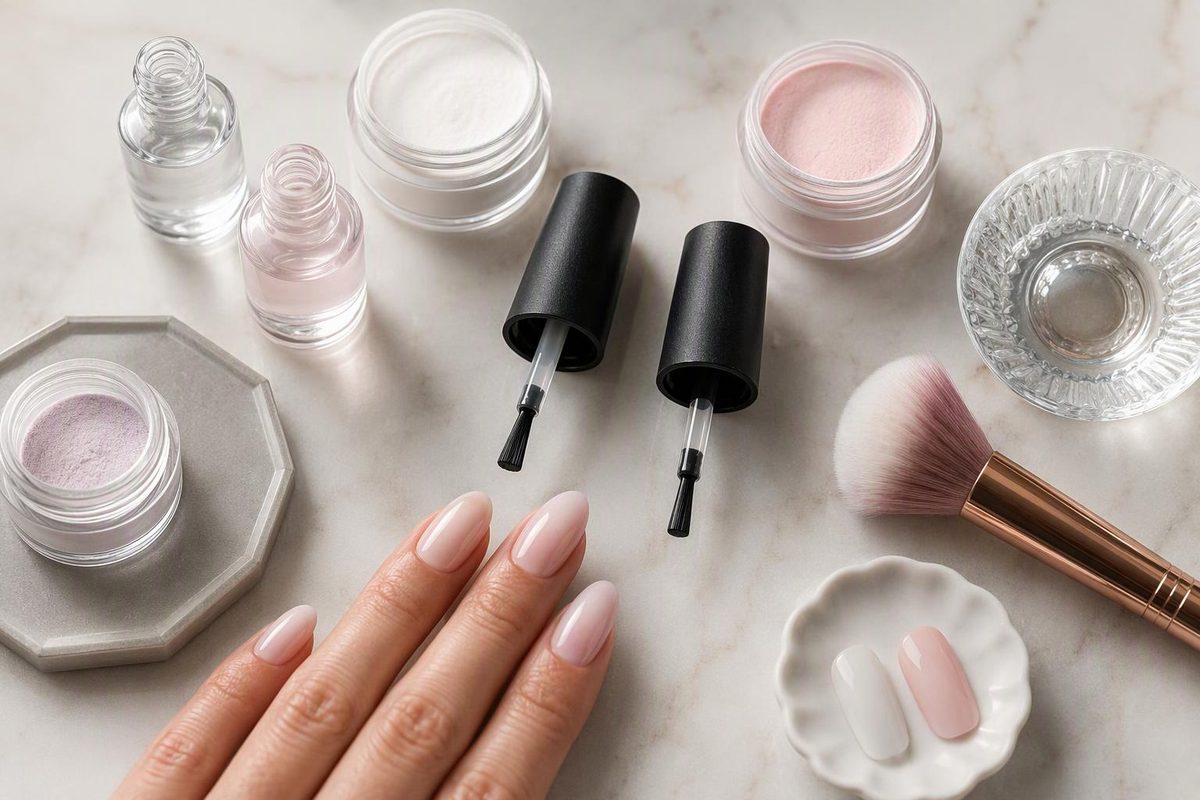
For a no-lamp dip manicure, use the top coat specified by your dip-liquid system. A lamp-cured gel top coat is an alternative only when its manufacturer provides instructions for use over dip powder—and those instructions may change the activator sequence.
The word “gel” on the bottle is not enough to decide. Revel’s standard Finish Gel reacts with its dip activator, while its Tack-Free UV Gel Top Coat requires a curing lamp. These are different finishing products, not interchangeable names for the same step. (Revel dip-liquid guidance, gel top-coat directions)
Choose by the instructions, not the finish name
| Option | What to check before using it |
|---|---|
| Your system’s no-lamp dip top coat | Required activator, waiting and wiping steps, coat count, and drying time |
| Lamp-cured gel top coat approved for dip | Dip-specific preparation, whether a second activator application is omitted, and the specified lamp and cure time |
| Regular nail-polish top coat | Explicit substitution instructions from the dip-system manufacturer; do not assume an air-dry lacquer replaces its finishing liquid |
For a straightforward replacement bottle, matching your existing liquid system avoids having to combine unrelated application recipes. A gel finish adds equipment and curing requirements; a gloss or durability claim alone does not establish that it will extend the wear of your dip manicure.
Applying a no-lamp dip top coat
The finishing stage begins after the powder layers have been activated and shaped. Here is Kiara Sky’s documented sequence, not a universal recipe:
- File, shape and buff the activated dip. Remove filing dust; Kiara Sky specifies a little alcohol at this stage.
- Apply Seal Protect again. Rub the nail thoroughly with a lint-free wipe to remove excess product.
- Apply Dip Top Coat in quick, thin strokes. Let the first coat dry.
- Apply a second coat. Kiara Sky specifies two minutes of drying after this coat.
- Finish with cuticle oil.
During application, wipe the top-coat brush clean with a lint-free wipe before returning it to the bottle. These steps and the two-minute drying instruction belong to Kiara Sky’s dip system. Do not transfer that timing to another brand or liquid line. For the earlier powder-building steps, see how to do dip powder nails with your kit’s sequence.
Can you use gel top coat over dip powder?
Yes, with a documented compatible method. For example, Revel directs users applying its Tack-Free UV Gel Top Coat over Revel dip powder to:
- Omit the second coat of Activator—not all activation.
- Apply one thin coat of the gel top coat.
- Cure for 90 seconds under a 36–48-watt UV/LED light.
Those are Revel’s product-specific directions, not a cure schedule for every gel top coat. Use the product manufacturer’s recommended lamp and keep uncured gel off your skin; the British Association of Dermatologists warns that insufficient curing and skin contact with uncured products can increase allergy risk.
Do not follow the no-lamp finishing recipe and simply add gel at the end. Check the gel-over-dip instructions first. A no-wipe gel top coat skips a final cleansing step; it does not skip lamp curing.
Dull finish or hardened brush? Check activation first
Dull or streaky top coat: Revel identifies two possible causes for its Finish Gel: too little Activator, or Activator that was not sufficiently dry before top-coat application. Its guidance distinguishes waiting times between liquid lines, so use the directions for the bottles you actually own. A dull finish is not automatically a sign that you need a different top coat. (Revel troubleshooting)
Brush turns stiff, stringy or hard: Kiara Sky warns that Seal Protect carried into Dip Top Coat can activate the liquid and ruin it. Remove excess Seal Protect as instructed and wipe the top-coat brush before returning it to the bottle. For a stiff brush, follow the brand’s Brush Saver procedure rather than adding an improvised solvent to the top coat. (Kiara Sky product care)
Before covering a problem or removing the manicure
Do not try to solve itching, swelling, fluid-filled bumps or a lifting natural nail with another coat. The American Academy of Dermatology identifies these as possible reactions to dip products, with adhesives a principal culprit; it advises removal and avoiding dip if a reaction develops. Seek dermatology advice for a persistent reaction. (AAD dip-manicure guidance)
For routine removal, follow the directions for the whole manicure, including any substituted gel top coat. Check whether that finish requires filing before the dip can be soaked off. Our dip-removal guide explains the sequence without peeling the coating away.