
Chrome Top Coat: Choose the Application Layer and Final Seal
Learn which top coat goes under chrome powder, what seals it, why cure times vary, and how a no-lamp glaze topper differs from mirror chrome.
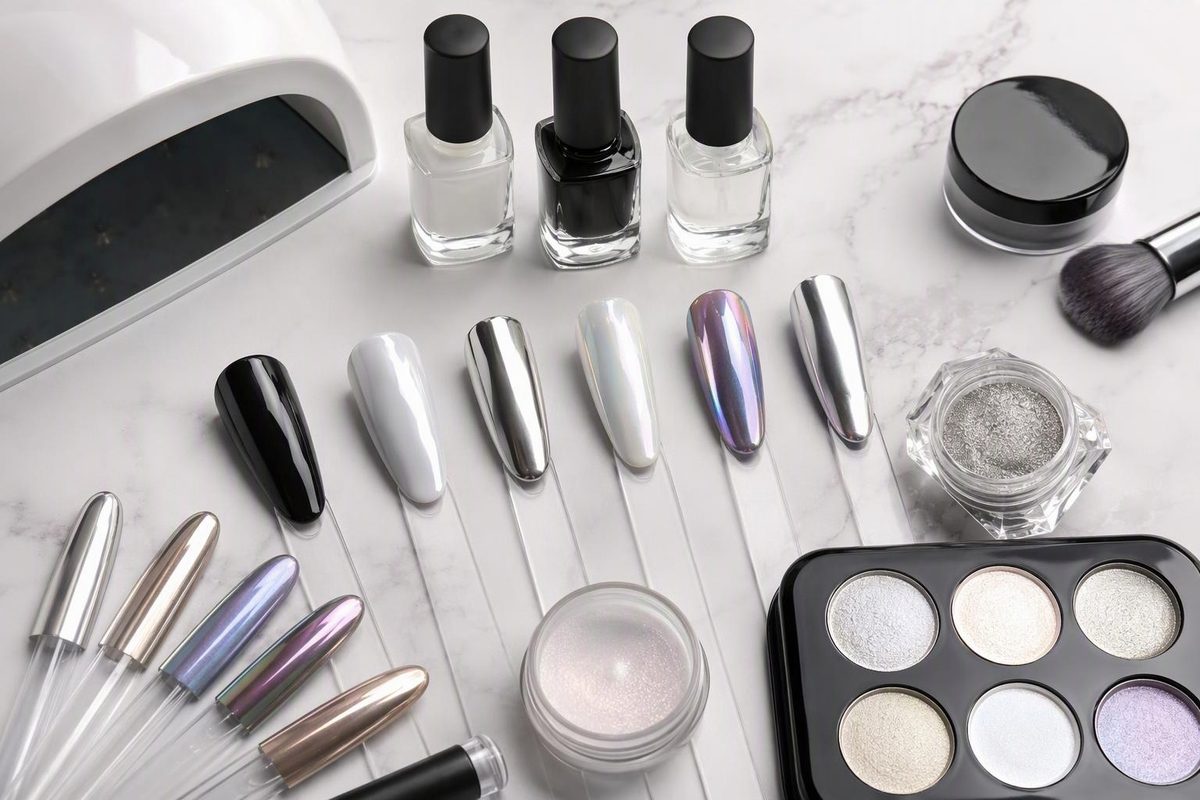
For a chrome-powder manicure, the coat under the powder creates the surface you rub it into; the coat over the powder seals the finish. Those are different jobs, and one bottle does not necessarily do both.
For example, Daily Charme’s Chrome Effect No-Wipe Gel is designed as a powder application layer. The manufacturer explicitly does not recommend using it as the final top coat. Meanwhile, a paint-on, chrome-like lacquer topper adds an effect without loose powder. Check which product you are buying before choosing a method. Daily Charme product details · OPI topper details
Which kind do you need?
| Your goal | What to look for | What to check |
|---|---|---|
| Rub powder into a reflective chrome finish | A no-wipe gel specifically compatible with your chrome powder | Required lamp, cure time and whether it is only an application layer |
| Protect an existing chrome-powder layer | The system’s recommended sealer and final top coat | Whether a clear base or builder layer is required before the top coat |
| Add a pearly glaze to regular polish without a lamp | An air-drying effect topper | Whether it still needs a separate protective top coat |
No-wipe does not mean no-cure. Daily Charme’s application gel leaves no tacky residue after curing, but its specifications list 60 seconds with LED or 120 seconds with UV. It is also labeled professional-use-only—not an at-home recommendation. Those times belong to that product, not every chrome-compatible gel. Daily Charme specifications
Our no-wipe gel top coat guide explains the distinction between skipping the final cleanse and skipping curing.
How the chrome-powder layers fit together
For the gel methods discussed here, the layer order is base → color → chrome-compatible no-wipe layer → powder → prescribed sealer/top coat. Follow the exact products’ instructions rather than treating that structure as a universal recipe.
For its chrome system, HONA advises:
- Apply powder over a cured non-wipe layer. A tacky color layer will not produce the same mirror-like finish.
- Use a small amount and buff it smooth. HONA recommends firm, sparse application, then further buffing with the clean side of the applicator.
- Brush away loose powder. Excess particles can interfere with the finish and sealing.
- Seal the edges as directed. HONA’s method includes filing the free edge and sides with a 240-grit file, then encasing the pigment with a recommended clear base or builder product. This is a finishing step, not an instruction to file the natural nail surface. HONA application guide
HONA also advises using an applicator rather than your finger and recommends eye protection, gloves and a mask when working with chrome powders to avoid eye irritation, inhalation and possible skin irritation. HONA powder-handling guidance
The practical buying question is therefore not just “Which top coat works with chrome?” Ask: “What is the complete application-and-sealing sequence for this powder?” A dedicated rubbing layer may leave you needing another product to finish the manicure.
If the chrome looks grainy, patchy or starts peeling
Grainy rather than reflective: Check powder quantity and the surface beneath it. HONA identifies excess powder and application onto a tacky layer as problems for a mirror finish.
Powder will not adhere: Check the prescribed cure time and hand placement. HONA warns that curing its application surface too long can prevent adhesion, while insufficient curing can also spoil the result. Do not solve this by deliberately undercuring an unrelated top coat.
Chipping at the tips: Check that loose powder was removed and the free edge was sealed according to the system’s method. HONA emphasizes both steps. These are troubleshooting priorities, not guarantees of a particular wear time. HONA troubleshooting guide
Curing is also a safety issue. The British Association of Dermatologists warns that uncured product touching skin and insufficient curing can increase allergy risk. Use the recommended lamp and keep uncured gel off surrounding skin. BAD allergy guidance
Want a no-lamp option instead?
A glaze topper is a simpler route if you want a pearly effect rather than a rubbed-powder mirror finish. OPI describes Infinite Shine Donut Disturb as a sheer pink shimmer topper with a chrome-like glaze—not a chrome powder.
Its directions call for Infinite Shine base, two color coats, the glaze topper, then Gel-Like Top Coat, with 1–2 minutes’ drying between layers. No lamp is needed, but the effect topper does not replace the protective top coat. OPI product directions
Removal follows the manicure underneath, not the word “chrome.” Follow the full system’s removal instructions; do not pick off a gel finish. The American Academy of Dermatology specifically advises against picking gel polish and describes acetone removal for gel-polish manicures. AAD gel-manicure guidance