
Choose a Fast Top Coat Without Misreading Dry-Time Claims
Compare quick-dry top coats claiming 30–60 seconds, learn what touch dry means, and use regular nail polish without bubbles, dents or smudges.
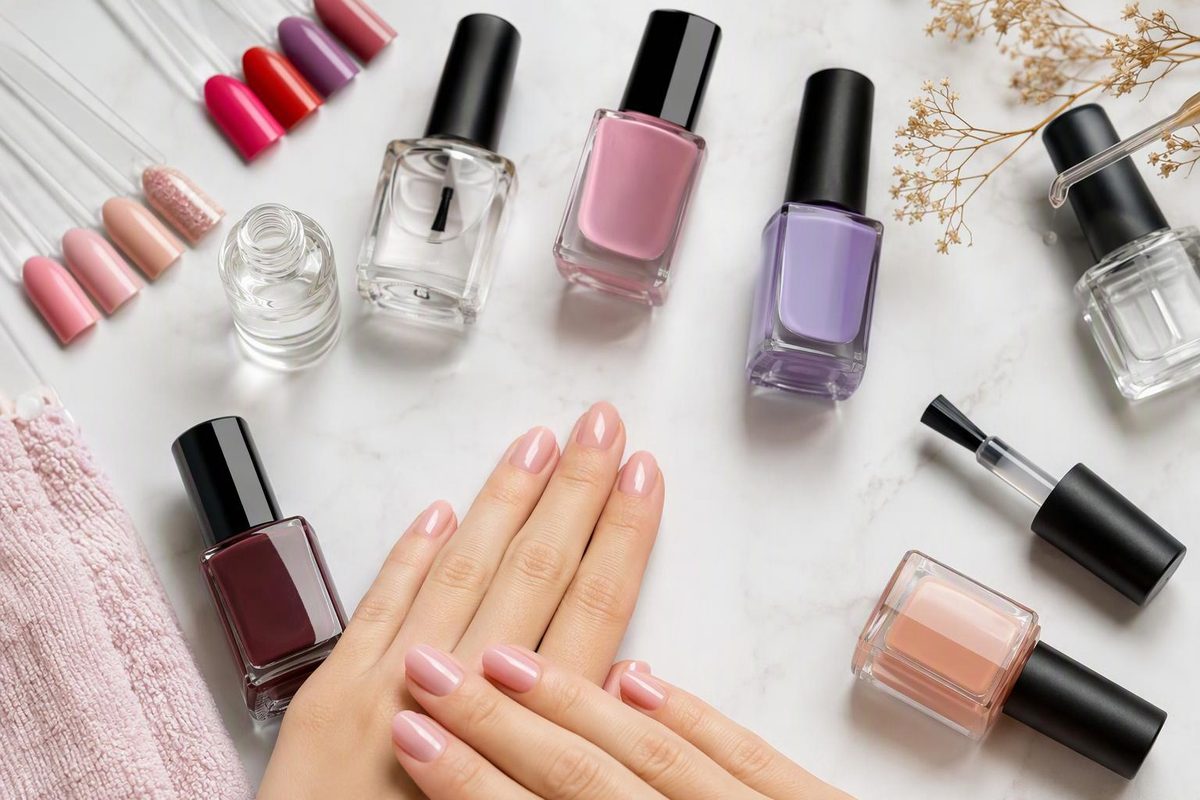
A quick-drying top coat can shorten the time regular nail polish is vulnerable to light smudges, but it cannot make several thick coats instantly hard all the way through. The most useful option is one that defines its drying endpoint—preferably “touch dry”—and tells you how long to wait after applying color.
Essie Speed Setter provides the clearest documented protocol among the three products compared here: apply two color coats, wait two minutes, then apply one coat of top coat. Essie says the manicure will be touch dry in under 60 seconds. These are manufacturer claims, not results from a standardized independent comparison.
Choose what matters most; the comparison identifies the best-documented match.
Match the Claim to Your Priority
The result compares published manufacturer wording, not independently measured drying performance.
My priority is:
Best-documented endpoint: Essie Speed Setter
Wait two minutes after two color coats, then apply one coat. Essie claims touch dry in under 60 seconds.
| Top coat | Published timing and caveat |
|---|---|
| Essie Speed Setter | Wait two minutes; touch dry in under 60 seconds.Why it stands outThe protocol and “touch dry” endpoint are both defined. |
| Sally Hansen Insta-Dri | Wait two minutes; dry to the touch “in just seconds.”Claim limitationThe endpoint is defined, but the US page gives no exact number of seconds. |
| OPI RapiDry | 30 seconds “wet to set”; as little as 60 seconds to “dry through.”Claim limitationThe page supplies the shortest number, but uses two different endpoints. |
Source: manufacturer product pages cited in the article. Claims were not independently tested head to head.
Three Documented Quick-Dry Options
The wording matters because “set,” “dry through” and “touch dry” may describe different stages.
| Top coat | Published directions and claim | How to interpret it |
|---|---|---|
| Essie Speed Setter | Apply two color coats, wait two minutes and add one top coat; Essie says the manicure becomes touch dry in under 60 seconds. | The clearest protocol and endpoint of the three. Essie publishes the directions and ingredient list. |
| Sally Hansen Insta-Dri Top Coat | The US page says to wait two minutes after color and apply one coat, which dries the color “to the touch in just seconds.” | A touch-dry claim with a defined wait before application, but no exact number of seconds. Sally Hansen also publishes its current US ingredient list. |
| OPI RapiDry Top Coat | Apply one coat as the final manicure step. OPI advertises a 30-second “wet to set” time and elsewhere on the same page says the product can dry through in as little as 60 seconds. | The page gives the shortest number, but its endpoints are not as consistent or precise as “touch dry.” OPI publishes the claims, directions and formula. |
This makes Essie’s claim the easiest to interpret, not proof that it performs best. Color formula, coat thickness, room conditions and how soon the nails encounter pressure can all affect the result. None of these product pages supplies a standardized head-to-head test.
Touch Dry Does Not Mean Fully Hardened
Regular lacquer is a solution of film-forming polymers and other ingredients in solvents. As the solvents evaporate, a thin film remains on the nail. This differs from conventional gel polish, which polymerizes when exposed to a compatible lamp. A 2025 chemistry review describes nail lacquer as a polymer solution that forms a layer through solvent evaporation (Mija et al., Polymers).
Quick-dry formulas target that vulnerable drying stage. A patent for one fast-drying top-coat composition explains that volatile solvent selection can shorten drying time, while solvent evaporation that is too rapid may contribute to streaking, bubbles, haze, or reduced gloss and adhesion (US10729639B2). That is useful formulation context, not evidence that every quick-dry formula works alike.
A nail can therefore resist a light touch yet remain soft enough to pick up a zipper dent or bedsheet mark. OPI’s product page says conventional polish can take up to 24 hours to harden fully, despite the much shorter claims for its quick-dry top coat. Treat a 30- or 60-second number as a surface-drying or setting claim unless the manufacturer clearly defines a more demanding test.
A quick-dry lacquer top coat also does not replace a compatible gel top coat. Lamp-cured products have different chemistry and directions; see how nail lacquer and gel differ.
Apply Quick-Dry Top Coat Without Trapping Soft Polish
- Apply thin layers. Use one thin base coat and the minimum number of thin color coats needed for even coverage. Thick layers take longer to dry and are more prone to bubbles or smudging; OPI likewise advises thin coats on its RapiDry page.
- Follow the top coat’s timing. Essie and Sally Hansen direct users to wait two minutes after color. Seche’s general guidance instead recommends applying top coat while the color is slightly tacky rather than fully dry (Seche application guidance). There is no universal wait that overrides the product directions.
- Apply one even coat with few strokes. Repeated brushing can drag still-soft color. Cover the color layer without flooding the surrounding skin.
- Do not tap the surface to test it. Respect the stated touch-dry or setting window.
- Keep avoiding firm pressure after that window. Buttons, bags, shoes and bedding can mark polish that feels dry on top but is still hardening below the surface.
If the manicure stays soft for hours, reduce the thickness of the color coats at the next application rather than adding more top coat. If bubbles appear, use thinner layers and avoid repeatedly working the brush over a film that has begun to set.
Check the Formula and Maintain the Bottle
“Quick dry” describes a performance claim, not one fixed ingredient profile. The current OPI formula begins with ethyl acetate, cellulose acetate butyrate and isopropyl alcohol. Sally Hansen’s US list also contains those ingredients, along with butyl acetate, acrylates copolymer, nitrocellulose, triphenyl phosphate and other additives. An ingredient list alone does not establish faster drying, longer wear or overall safety.
If you are avoiding a particular ingredient, check the bottle or the product page for your market rather than assuming quick-dry top coats are interchangeable. Use lacquer in a ventilated space and close the bottle promptly. CDC/NIOSH says ventilation can reduce airborne chemical levels and recommends keeping nail-product containers closed, although its guidance is written for occupational nail-salon exposure (CDC nail-product guidance).
Fast-evaporating formulas may thicken as solvent escapes during use. Follow the brand’s maintenance directions and use only a compatible nail-polish thinner. For Seche Vite, the manufacturer specifically recommends Seche Restore to replace ingredients that have evaporated and return the top coat to its original consistency (Seche Restore directions).
The practical buying rule is to choose a regular-lacquer top coat with a defined drying endpoint, clear timing instructions and an ingredient list you can review. Keep the color coats thin, then allow more caution time than the shortest front-label number suggests.