
Choose Satin or Matte Nails Without Mixing Up the Systems
Compare satin and matte nail finishes by sheen, top-coat compatibility and gel requirements, with product-specific application and removal guidance.
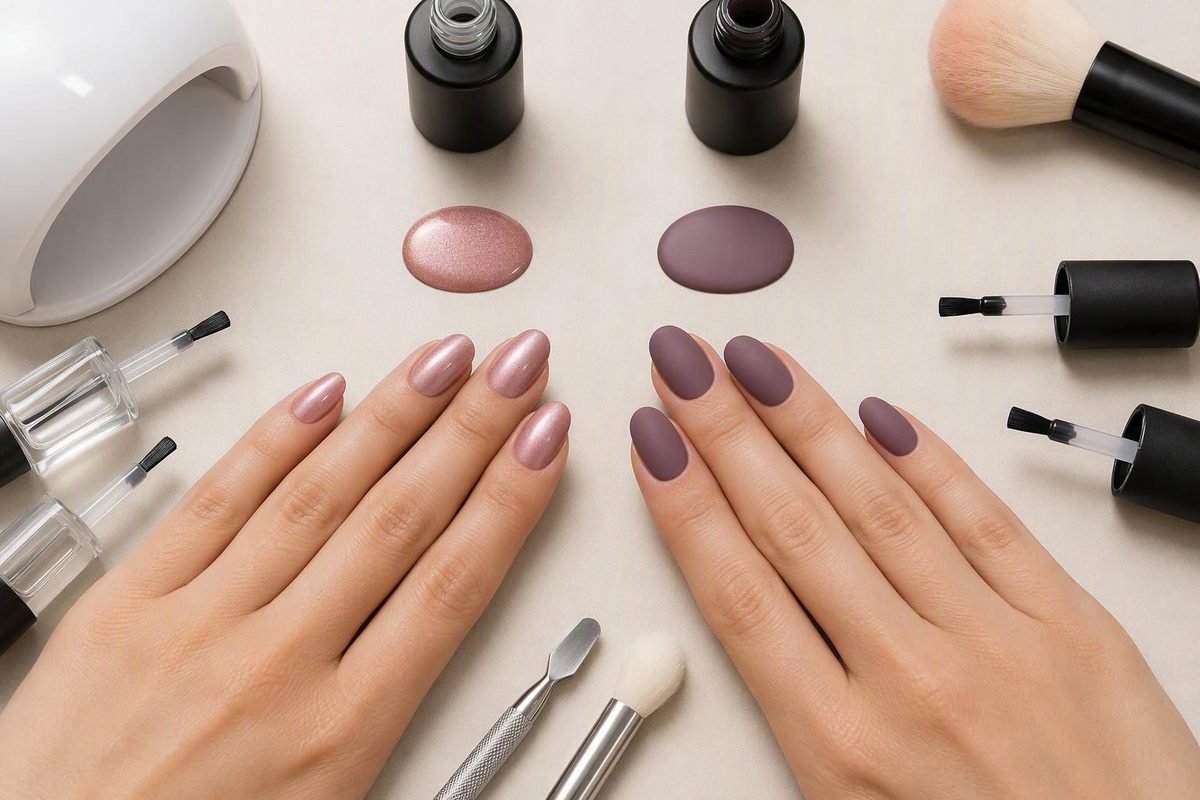
Satin nails retain a soft, low sheen; matte nails aim for a flatter, shine-free surface. Choose satin if you want reduced gloss with some sheen remaining. Choose matte if removing the glossy reflection is the point. Neither finish name tells you whether the product air-dries, needs a lamp, lasts longer or requires a particular removal method.
These are appearance descriptions, not separate manicure systems. Zoya describes its Satin color formula as a hybrid between matte and glossy polish, while OPI describes its Super Matte gel top coat as producing a velvety matte finish. Those descriptions support the visual distinction, but they do not establish an identical finish across brands. Check the named product and its finished swatches. (Zoya Satin description, OPI Super Matte description)
Pick your preferred sheen and manicure system; the tool shows what to check before choosing a product.
Match the Finish to Your System
Satin Is the Appearance Match
Choose a satin color or a satin top coat confirmed for your lacquer. The finish name alone does not establish compatibility.
Check the finishing sequence: Zoya Satin color has conflicting top-coat directions on its cited page. Zoya Satin Seal is a separate finishing layer; its optional Glossy Seal step produces a shiny finish.
Sources: Zoya Satin color and Naked Manicure Satin Seal descriptions; OPI GelColor Super Matte instructions. Manufacturer guidance, not independent wear testing.
Satin Keeps Some Sheen; Matte Prioritizes a Flat Look
| Finish | Surface Appearance | Best Fit |
|---|---|---|
| Satin | Subdued sheen between glossy and matte | Reduced gloss, with some sheen remaining |
| Matte | Flat, shine-free appearance | A deliberately non-glossy surface |
The deciding distinction is the amount of sheen you want to retain. A satin description points toward a middle ground, not a fully glossy manicure and not an entirely flat one. A matte description points toward the non-glossy end. If that difference is your only concern, satin is the choice for residual sheen and matte is the choice for a flatter surface.
A manufacturer’s finish name is still only the starting point. Zoya’s description applies to its Satin color formula; OPI’s velvety-matte description applies to its Super Matte gel top coat. Neither description proves that another product carrying the same label will look identical. Use the product’s own finished swatches to judge whether its version of satin or matte matches your preference.
For a natural-nail-style look, Zoya markets Naked Manicure Satin Seal specifically for that purpose. That is a stated use for Satin Seal, not a promise that every satin polish will resemble an unpolished nail. It also does not make satin the only suitable finish for a restrained manicure. (Zoya Satin Seal)
For deliberate contrast, OPI demonstrates matte nails with glossy French tips and glossy designs over a matte background. The contrast is the design choice: the background and detail have different finishes. These examples show a manufacturer-described use of matte top coat, not evidence that matte is better for every nail-art design. (OPI matte nail-art ideas)
If you want a uniformly satin or matte manicure, make that part of the product choice or salon request. A matte background with glossy details is different from a completely matte finish, even when both are described casually as “matte nails.”
A Finish Color and a Finishing Top Coat Are Different Purchases
A finish can come from the color formula itself or from a separate finishing layer. That distinction matters more to application than the word satin or matte alone. Buying a color with a built-in finish is not the same decision as buying a top coat to change the appearance of another color.
Zoya Satin Color Has Conflicting Top-Coat Instructions
Zoya’s Satin color description says the formula is not intended to be worn with a top coat. That is a direction for that formula, not a rule that satin manicures never use top coat. Zoya also sells Satin Seal as a separate finishing product, so “satin” clearly does not identify one universal application sequence.
There is an unresolved detail on the cited Satin color page: its general application steps include a top coat, despite the formula-specific description saying otherwise. The page therefore does not provide an unambiguous sequence for adding that layer. Confirm the directions with Zoya before applying an extra finishing coat if your bottle presents the same conflict.
Do not resolve that contradiction by assuming the general steps override the formula description, or that the formula description makes every other instruction irrelevant. The evidence available here does not settle which instruction the brand intends for that specific purchase. It supports flagging the conflict rather than inventing a definitive sequence.
A built-in finish may simplify the purchase because you are choosing the color and finish together. It does not remove the need to check the bottle’s application directions. If you already own the color, start with its exact name and instructions rather than buying a finishing layer solely because the sheen sounds right.
A Separate Top Coat Must Match the Color System
A satin or matte top coat supplies the finish as a separate layer. Before choosing one, establish whether it is intended for regular lacquer or a lamp-cured gel system, then check compatibility with the color product underneath. The finish label does not answer either question.
For example, OPI’s professional GelColor Super Matte is a gel-system product with a specified lamp cure. Its matte appearance is not evidence that it can be treated like an air-drying lacquer top coat. Conversely, the presence of a satin finish in Zoya’s color range does not establish a satin-gel application sequence.
If you are changing the finish of a color you already use, the useful buying question is whether the proposed top coat is permitted over that exact color system. A product that creates the desired sheen but has an unconfirmed application sequence is not yet a confirmed match. Our lacquer-versus-gel comparison explains the underlying system differences.
The Last Permitted Layer Determines the Intended Finish
Zoya specifically permits Glossy Seal over Satin Seal for an optional shiny finish. If your goal is to preserve Satin Seal’s satin appearance, skip that optional glossy finishing step. This is a documented option in Zoya’s Naked Manicure sequence, not a general instruction to layer any glossy product over any satin product.
That example also explains why “use a top coat” is too vague for a finish comparison. The relevant information is which top coat, where it belongs in the sequence and what finish the completed sequence is intended to produce. A satin layer followed by an optional shiny finishing layer is not the same choice as stopping at satin.
For a salon appointment, describe both the finish and its coverage: satin throughout, matte throughout, or matte with glossy details. OPI’s demonstrated matte-and-gloss nail art makes that distinction concrete. Asking only for matte could leave the design details unspecified; identifying the intended final appearance avoids that ambiguity without prescribing the salon’s product sequence.
For a home manicure, follow the permitted sequence rather than adding a familiar final layer automatically. The cited Zoya products illustrate why the answer varies: Satin color has a formula-specific no-top-coat statement with conflicting general steps, while Satin Seal is itself a finishing layer with an optional glossy layer above it.
Mixing and Application Directions Belong to the Named Product
The cited manufacturers give different preparation directions. They should remain attached to their respective products rather than becoming a universal satin-versus-matte technique.
| Product or Guidance | Bottle Preparation | Application Direction |
|---|---|---|
| Zoya Satin Seal | Gently roll for 20 seconds | One coat in its Naked Manicure sequence |
| OPI matte top-coat guidance | Shake thoroughly for a full minute | Thin, even coats |
Zoya’s Satin Seal directions call for gently rolling the bottle between your hands for 20 seconds, then applying one coat within the Naked Manicure sequence. OPI’s cited matte top-coat guidance calls for thorough shaking for a full minute and thin, even coats. These directions come from the Satin Seal page and OPI’s matte nail-art guidance linked above.
The difference does not establish that satin products should always be rolled or matte products should always be shaken. It establishes that these two cited instructions are not interchangeable. Nor does the OPI blog’s general matte top-coat guidance replace the cure and finishing instructions for a named GelColor product.
The same limit applies to coat counts. Zoya specifies one coat of Satin Seal in its sequence; that number should not be transferred to an unrelated satin color or matte gel. Where the exact product’s directions are absent or contradictory, this comparison cannot supply a substitute application procedure.
A Matte Gel Still Needs Its Specified Cure
A matte appearance does not replace a gel’s required cure. OPI’s professional GelColor Super Matte specifies a 30-second cure in the OPI Star Light, followed by removal of the tacky layer with its designated cleanser. Both the product and the lamp are part of that instruction.
That is not a cure time for all matte gels, all OPI products or all lamps. It also does not establish a cure time for a satin gel. Carrying the same finish description is not evidence that another formula has the same curing requirements.
For this named Super Matte product, the final cleansing step belongs to the stated process. Do not infer that a matte-looking surface means the cleanser can be skipped. If avoiding the final cleanse is part of your product preference, look for an explicitly no-wipe gel top coat with the finish you want and check its own instructions.
The practical choice is therefore two-part: choose the desired sheen, then choose a compatible system whose application requirements you can follow. A preference for matte does not by itself make gel necessary, and a preference for satin does not establish that the product air-dries. The exact formula supplies that answer.
Neither Finish Has a Demonstrated Wear Advantage Here
Neither satin nor matte is a dependable wear-time promise. This comparison has no independently tested, like-for-like wear figures establishing that one finish lasts longer. The cited material also does not supply a controlled satin-versus-matte wear comparison from which to calculate an advantage.
A satin color worn without top coat and a matte gel top coat differ in more than appearance. They involve different formulas and application sequences. Comparing their advertised wear would not isolate the effect of satin versus matte, so it would not answer whether the finish itself improves durability.
If wear is your deciding factor, assess the complete named system and its stated maintenance requirements. Keep the appearance decision separate: satin for retained sheen, matte for a flatter look. The evidence here does not justify choosing either finish because it supposedly resists chips better or lasts a particular number of days.
These product descriptions and instructions were not independently wear-tested for this comparison. They support the stated appearance and application distinctions, not a performance ranking.
Removal Follows the System, Not the Sheen
OPI’s GelColor removal protocol uses remover-saturated wraps with a 15-minute initial soak. That is a GelColor protocol, not a removal time for every satin or matte manicure. The word “initial” also matters: it describes the initial soak in the cited process, not a guaranteed total removal time. (OPI GelColor removal)
Follow the exact system’s removal directions, including any enhancement underneath. A finish description alone does not identify what needs to be removed or which procedure applies. The available evidence does not supply a separate satin removal time or show that matte finishes universally take longer to remove.
Before purchasing or booking, settle the three details that actually determine the choice: the sheen you want, whether the named product air-dries or requires a specified lamp, and the permitted finishing sequence. Choose satin for soft residual sheen or matte for a flatter surface, then confirm that the complete product system supports that result.