
Polygel vs Builder Gel: Soak-Off and Hard Builders Compared
Compare polygel with soak-off and hard builder gels by application, extensions, curing and removal—not untested strength or wear rankings.
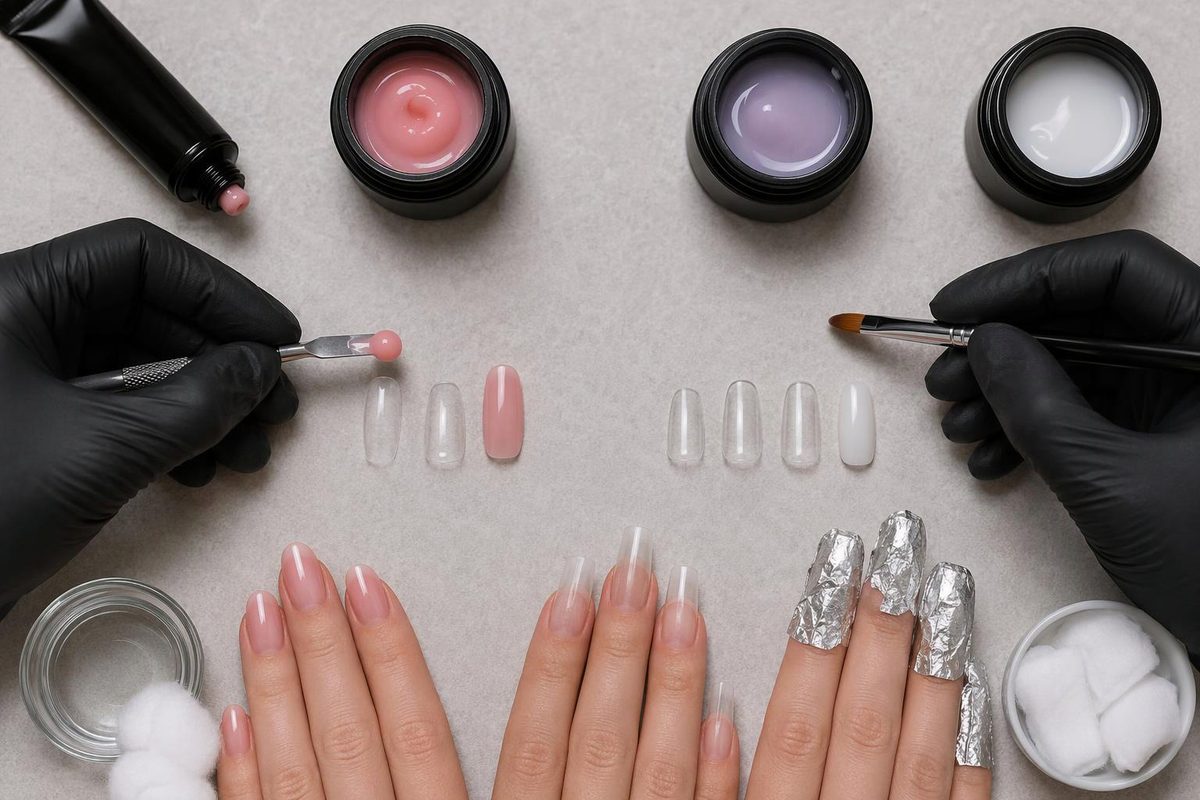
If you want a structured manicure that can soak off, start with a builder gel explicitly labeled soak-off. If you prefer a material you portion out and pat into shape, polygel is worth considering—but check its removal instructions before choosing it. Gelish PolyGel uses filing-based removal, so it is closer to a hard builder on that practical point than to a soak-off builder. Gelish’s application and removal directions document both the shaping method and the filing process.
The important distinction is not simply “polygel or builder.” Builder gel includes both soak-off and hard, file-off formulas. Even a bottle with a brush does not settle the question: The GelBottle’s HEMA-Free BIAB is soak-off, while its Hard BIAB is file-off.
What changes between the systems?
Gelish describes PolyGel as a premixed hybrid nail enhancement, rather than an acrylic or hard gel. Builder gel describes a product’s structural role: adding support, building an overlay over an existing nail or creating an extension that adds length. The examples below show why the exact formula matters more than the category name.
| Decision point | Polygel: Gelish PolyGel example | Soak-off builder: Light Elegance JimmyGel example | Hard builder gel examples |
|---|---|---|---|
| Application | Dispense from a tube; place and shape with a brush moistened with Slip Solution | Apply with the bottle brush; add product in the structural area and let it self-level | Brush application; movement varies by formula, from slow-moving to self-leveling |
| Structural use | Sculpting and overlays over tips | Natural-nail overlays and extensions | Overlays, sculpted extensions and reinforcement of longer nails |
| Setting | Lamp-cured | Lamp-cured | Lamp-cured |
| Removal | File down; Gelish directs leaving a thin layer rather than filing the natural nail | Soak-off, with preparation and compatible underlying layers | File-off rather than soak-off |
These are documented product examples, not interchangeable instructions. Follow the exact system’s application and curing directions. Sources: Gelish PolyGel, JimmyGel, Light Elegance’s hard-gel viscosity guide and Hard BIAB.
Which should you choose?
For natural-nail support with a soak-off option
A soak-off builder is the clearest starting point if a soaking route for removal is your priority. JimmyGel, for example, is intended for structured natural-nail overlays as well as extensions. Its self-leveling application may suit someone who prefers guiding a flowing gel rather than manually patting a portion into shape. That is a handling preference, not proof that it is easier for every beginner. JimmyGel’s directions describe that application.
For deliberate, portion-by-portion shaping
Consider polygel if the dispense-and-shape workflow appeals to you. Gelish’s method uses a tool to slice product from the tube, then a brush and Slip Solution to shape it before curing. Unlike a self-leveling builder, that workflow emphasizes placing and patting the material into the desired shape. It also adds a shaping tool and solution to the equipment list. Gelish’s step-by-step method shows the sequence.
This is not a shortcut around learning nail structure or removal. For a fuller explanation of the system itself, see our polygel guide.
For longer nails and ongoing structural maintenance
A hard builder is a reasonable option to discuss with a technician when you want longer nails and accept filing-based maintenance. The GelBottle specifically positions Hard BIAB for reinforcing long natural nails, sculpting extensions and infills—maintenance that adds product to the grown-out enhancement. That is the manufacturer’s intended use, not evidence that every hard builder outperforms every polygel. Hard BIAB’s product guidance states those uses.
Hard gel also does not automatically mean a runny material. Light Elegance distinguishes its slow-moving, non-self-leveling Builder from more self-leveling Extreme, so a preference for controlled shaping does not rule out builder gel. See our hard builder gel guide for the file-off system in more detail.
Plan removal before the first application
For these examples, Gelish PolyGel differs more from a soak-off builder than from a hard builder in its removal method.
Gelish instructs users to file off most PolyGel, avoid filing the natural nail and leave a thin remaining enhancement. Hard BIAB is also file-off. Gelish’s directions and Hard BIAB’s removal guidance establish those routes.
Do not assume “soak-off” means no filing, or that every layer in the manicure will soak off:
- HEMA-Free BIAB: The GelBottle requires filing off the top-coat layer before soaking. Removal guidance.
- JimmyGel: Light Elegance specifies reducing excess thickness and removing hard-gel layers above it before soaking. It recommends P+ QDbase underneath when complete soak-off removal is planned, rather than the Tack bonding agent recommended for fills. JimmyGel directions.
Before booking, ask for the exact product name, whether the appointment is an overlay or extension, the intended infill schedule, and the price of eventual removal. “Builder manicure” alone does not tell you how it will come off.
Strength claims do not settle wear—or safety
A manufacturer’s strength or wear claim is not a head-to-head test of these categories. Choose by the documented length capability, handling and removal plan rather than assuming polygel is always stronger or builder gel always lasts longer. Our builder-gel wear guide separates wear claims from maintenance decisions.
Neither choice bypasses curing precautions. The British Association of Dermatologists warns that uncured artificial-nail products touching skin can cause sensitisation, and insufficient curing can increase allergy risk. It advises using the recommended lamp and avoiding direct skin contact. That applies regardless of which handling style you prefer. BAD’s artificial-nail warning supports those precautions.
For at-home use, an easier-to-shape texture is not enough: you also need the specified lamp, the complete application directions and a removal method you can carry out without filing into your natural nails.