
Builder gel wear claims commonly span 3–4 weeks, but regrowth, lifting and nail balance should determine when you need an infill.
Builder gel wear claims commonly span 3–4 weeks. Learn when to infill, what shortens wear, and how soak-off and file-off removal differ.
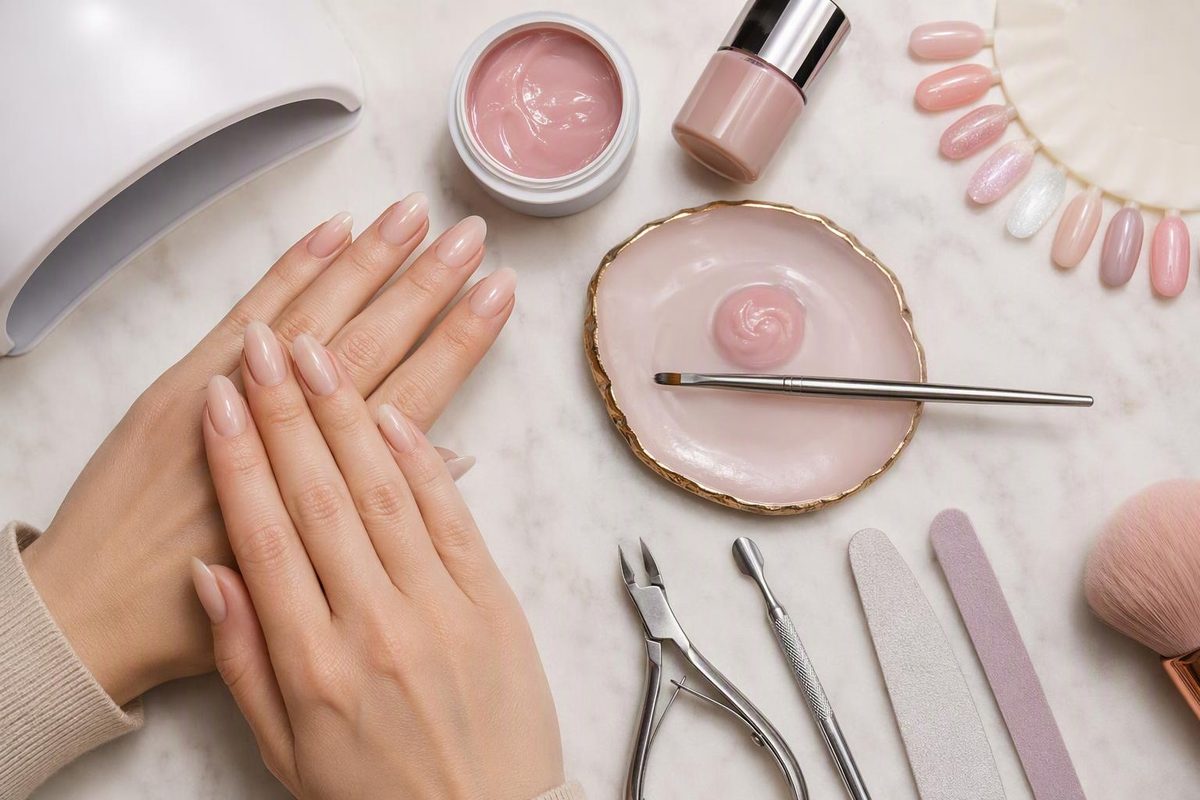
Plan on about 2–4 weeks between builder-gel appointments. The product may remain attached longer, but 2–3 weeks is a useful first check-in window for an infill because regrowth can affect both appearance and the balance of the enhancement.
This range comes from brand guidance, not a controlled comparison of builder gels. Gelish advertises 21+ days for its Brush-On Builder, Glitterbels says its builder gel can last up to four weeks, and CND claims 3+ week wear for PLEXIGEL Shaper (Gelish, Glitterbels, CND). The GelBottle separately recommends BIAB infills every 2–3 weeks (The GelBottle). Your result can be shorter or longer depending on the formula, application, nail length, natural-nail condition and daily use.
“Still attached” is not the only measure of wear
Builder gel wear has three practical dimensions:
- Retention: Is the product still bonded without lifting, cracking or breaking?
- Appearance: Is the regrowth gap or surface wear acceptable to you?
- Structure: Does the enhancement still have an appropriate shape and balance as the natural nail grows?
An infill is more than covering the gap with fresh gel. Lifted or excess product is removed, the shape is refined and new product is applied to restore the structure. CND describes rebalancing as maintaining an enhancement while the natural nail grows; its protocol reduces bulk and rebuilds the upper arch and apex (CND rebalance guide).
A full removal is therefore not automatically needed at every appointment. If the formula permits infilling and the remaining product is sound, it may be rebalanced instead. Follow the schedule and maintenance method for the exact system used rather than waiting for the coating to fail.
What makes builder gel lift or break early?
Common variables include:
- oil, dust or non-living tissue left on the nail plate;
- gel touching or flooding the surrounding skin;
- product applied at the wrong thickness;
- an incompatible lamp, incorrect cure time or inadequate curing;
- insufficient structure for the nail’s length;
- repeated pressure at the free edge or exposure to harsh chemicals;
- picking at an already lifted area.
The GelBottle’s technical guidance identifies preparation, application and insufficient curing as causes of lifting. Its longer lifting guide also says pressure and routine wear at the free edge can shorten retention (application troubleshooting, lifting guide). These are the manufacturer’s directions for its own system, but they illustrate why one wear figure cannot apply to every manicure.
Builder gel is intended to add structure; it is not simply a thicker color coat. If you want flexibility with less added structure, see how rubber base differs from builder gel. For a broader comparison with ordinary polish, read nail lacquer vs gel.
Do not extend wear by covering a lifted area
If one nail lifts, do not pick, peel or simply paint over the separation. The affected area needs to be assessed and the loose product removed before repair. CND’s rebalance protocol instructs technicians to thin lifted material until the separated product flakes away and a new seal is found; The GelBottle also warns that picking or peeling can damage the nail plate (CND rebalance guide, BIAB removal guide).
Do not wait for a routine appointment if the nail is painful, cracked or separating. Stop using the product and seek medical advice if the surrounding skin becomes itchy, swollen, blistered or persistently red.
The British Association of Dermatologists says skin contact with uncured (meth)acrylate nail products can cause sensitization and that insufficient curing can increase allergy risk. It advises following the instructions and using the recommended lamp rather than combining a gel with an unvalidated lamp (BAD guidance).
Removal depends on the exact builder gel
“Builder gel” describes what a product does, not one universal removal method. Check whether the exact formula is labeled soak-off or file-off.
- Soak-off builder gel: The surface and bulk may need to be filed down before an acetone wrap. The GelBottle’s BIAB instructions say to check after 10–15 minutes and rewrap for another five minutes if the product has not softened. It warns against forcing product off (BIAB removal instructions).
- File-off builder gel: The product is removed by controlled filing rather than expecting acetone to dissolve the whole enhancement. The GelBottle identifies Hard BIAB as file-off; when its optional soak-off base is used, the hard product is filed away first and only the remaining base is soaked (Hard BIAB guide).
- Product-specific hybrids: Names such as “builder” or “enhancement gel” still do not tell you the full procedure. CND’s PLEXIGEL removal protocol, for example, directs the user to file away up to 95% of the coating before wrapping the thin remainder in acetone for 20–30 minutes (CND removal guide).
If you cannot identify the product or its removal category, professional removal is preferable to prolonged soaking, forceful scraping or filing without knowing where the natural nail begins.
In practical terms: expect to assess builder gel at 2–3 weeks, with many brand claims extending to roughly 3–4 weeks. Regrowth, lifting and structural balance are better maintenance signals than the longest advertised wear figure.