
Shape the Magnetic Pattern Before You Cure the Gel
Learn how cat’s eye gel nail polish uses a magnet, when to cure the pattern, how to match the lamp and system, fix flat effects, and remove it safely.
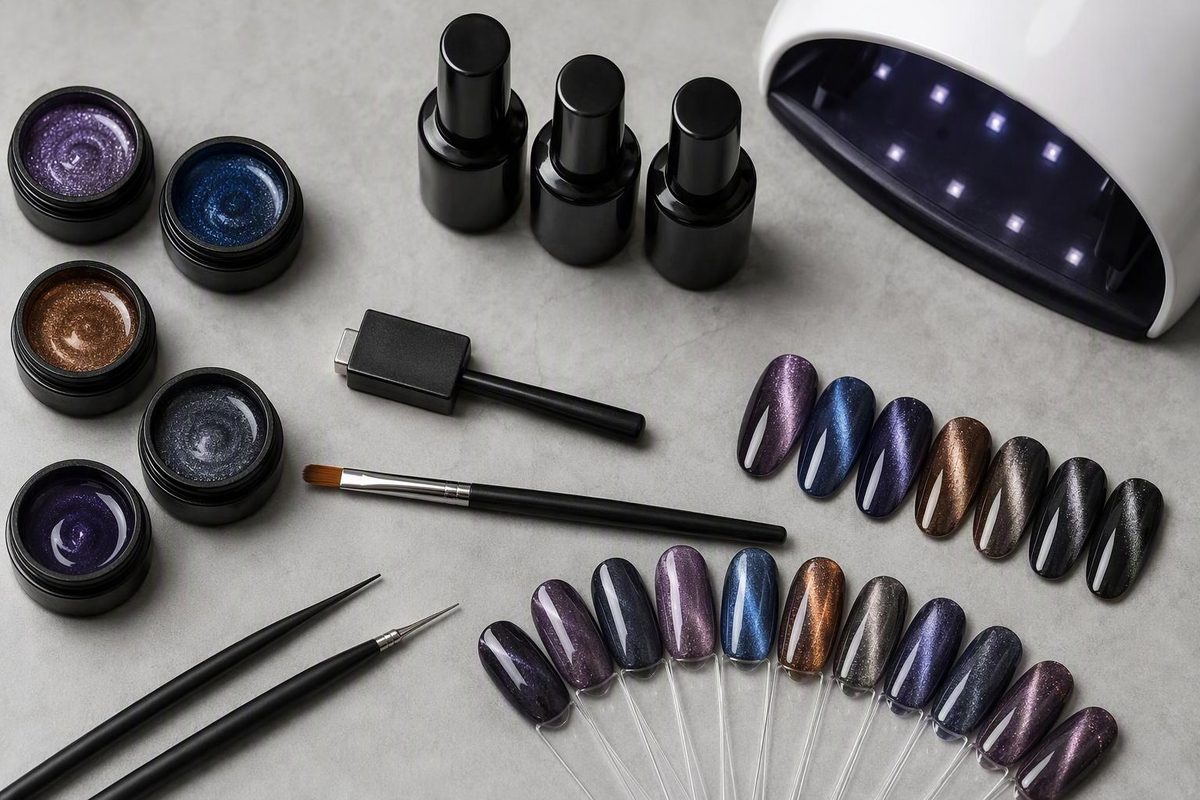
Cat’s eye gel nail polish—also sold as cat-eye gel or magnetic gel polish—contains reflective particles that move when a magnet is held near the wet coating. Shape the effect before curing, then use the lamp and cure time specified for that gel system. The magnet creates the design; it does not cure the polish.
Check the three system details; the result shows whether you are ready to apply it.
Cat’s Eye System Readiness Check
Pause before applying
Find the exact product directions, compatible lamp and removal method before opening the gel.
Sources: British Association of Dermatologists lamp guidance, American Academy of Dermatology gel-removal guidance and the manufacturer directions cited in the article.
Cat’s eye gel remains part of the lamp-cured category explained in our gel nail polish guide. The product directions determine the base coat, lamp, cure time, top coat and removal method.
Magnetic Particles Create the Cat’s Eye Effect
The moving shimmer is not ordinary glitter. It responds to a magnetic field while the gel remains liquid. The exact formula varies: a January 2024 safety data sheet for Gelish Aurora Cat Eye Magnet Gel lists iron powder alongside acrylates and other ingredients (Gelish Aurora SDS). That identifies iron in this particular formula, not in every cat’s eye polish.
Gelish says the particles in its product move according to the magnet’s field. The round and rectangular ends of its tool produce different effects (Gelish application guide). Once the gel is cured, the design can no longer be reshaped.
The pattern can soften if a wet nail is left waiting. Mylee therefore instructs users of its cat-eye gel to magnetize and cure one nail at a time so the particles do not shift before curing (Mylee cat-eye guide).
Use a Complete, Compatible Gel System
Check the exact product instructions before assembling a mixed-brand kit. A typical system includes:
- cat’s eye gel polish;
- the compatible base and top coat, unless the product says they are unnecessary;
- the lamp specified for that gel system;
- a magnet made for magnetic nail polish;
- the preparation and removal supplies required by the system.
Do not choose a lamp by wattage alone or assume any UV/LED lamp can cure any gel. The British Association of Dermatologists (BAD) advises using the recommended lamp and warns that insufficient curing can increase allergy risk (BAD guidance). If the color, base and top come from different systems, there may be no manufacturer-validated cure schedule for that combination.
A black undercoat is optional, not a rule. Some translucent magnetic gels are designed for use over another color. Gelish, for example, says dark shades make its Magnetic Reflections effect more prominent (Gelish product guide). Other cat’s eye gels have their own colored base and do not require black underneath.
Apply the Magnet Before Curing Each Nail
Use this as a general sequence, replacing every product choice and timing with the directions for the gel in your hand.
- Prepare the nail as directed. Shape the free edge and remove oil and dust using the system’s specified method. Avoid aggressively thinning the nail plate or cutting live skin.
- Apply and cure the base coat. Keep the coating thin and off the surrounding skin.
- Add a base color if directed. Cure it fully before applying the magnetic layer.
- Apply a thin cat’s eye coat, but do not cure it yet. The particles must remain mobile for the magnet to work.
- Hover the magnet close to the wet gel without touching it. Watch the reflection rather than the tool. When the effect reaches the position you want, move directly to the lamp.
- Cure for the product’s full specified time. Complete one nail before painting the next if the pattern tends to spread.
- Apply and cure the required top coat. Cleanse a residual layer only if its directions require it. A no-wipe gel top coat still needs curing; “no wipe” describes the finish after cure.
Cure schedules are not interchangeable. Bio Seaweed Gel specifies 60 seconds in an LED lamp or 120 seconds in a UV lamp for its cat-eye layer (Bio Seaweed Gel instructions). Mylee specifies 60 seconds in a Mylee LED lamp for its product. These manufacturer instructions show why a generic cure time is unreliable; they were not independently tested for this article.
Three Magnet Placements Produce Different Patterns
Practice on a swatch tip first. If the design is wrong, reposition the particles while the coat is wet rather than adding extra thickness to rescue it.
Classic Line
Hold the long edge of the magnet diagonally or lengthwise over the center. Moving it closer generally makes the band more concentrated, but do not let the tool touch the wet gel.
Side Glow
Approach from one side to move the brightest area off-center. Turning a two-sided tool over may change how it moves the particles.
Velvet Effect
Move the magnet around the sides and free edge to concentrate the glow toward the center. Gelish’s method uses one cured coat followed by a second wet coat magnetized from all four sides before curing, as shown in its application guide cited above.
A Flat or Fading Effect Usually Starts Before Cure
The Polish Was Cured Before Magnetizing
Cured particles cannot be rearranged. If the system permits another coat, apply it thinly, shape it while wet and then cure it.
The Magnet Was Too Far Away
Bring it closer without touching the coating, and hold it steady long enough to see the reflection move.
The Design Softened Before Cure
Work one nail at a time. Position the lamp so you can move the hand into it without delay after creating the pattern.
The Result Lacks Contrast
Check whether the product is a sheer magnetic topper. If so, use the manufacturer’s suggested base shade. Black can overwhelm a cat’s eye gel designed to show its own color.
The Surface Wrinkles or Remains Soft
Do not cover it with top coat and assume that will complete the cure. Check the coat thickness, specified lamp and full cure schedule. Appearance alone cannot establish that gel has cured properly.
Uncured Gel Must Stay Off the Skin
The magnetic pigment does not remove the usual gel-polish precautions. The Gelish Aurora safety data sheet classifies that uncured product as a skin irritant and skin sensitizer, but hazard information must be checked for the exact bottle rather than transferred from one brand to another.
Keep uncured gel off the skin and cure only the thickness specified by the manufacturer, using its recommended lamp. BAD reports that sensitization can occur when uncured (meth)acrylate nail products contact skin and that inadequate curing can increase the risk. Reported reactions include a red, itchy rash and nail loosening; symptoms may also appear on the eyelids, face or neck (BAD patient guidance).
Stop using the product and seek medical advice for a suspected reaction rather than covering the symptoms with another manicure.
The Underlying System Determines Removal
“Cat’s eye” describes an optical effect, not a special removal category. If the complete manicure is soak-off gel polish, follow its soak-off directions. If the magnetic color sits over a file-off enhancement, the underlying structure determines removal.
Do not peel or scrape the coating away. The American Academy of Dermatology says acetone is the most effective at-home method for gel polish and warns that picking or filing it off can significantly damage nails. Its method uses petroleum jelly on surrounding skin, nail-sized acetone-soaked cotton sealed with plastic wrap for 10 minutes, and a warm, wet washcloth to remove softened residue gently (AAD removal instructions). Check the manufacturer’s directions first because products and soak times differ.
Cat’s eye describes the finish, not a promise of longer wear, safer chemistry or easier removal. A suitable product identifies its compatible lamp, complete application system and removal method—not merely an appealing magnetic effect.