
Rubber Base Gel Is a Flexible Gel Base—Not One Standard Formula
Learn what rubber base gel does, how it differs from builder gel, and why product-specific lamp, application and removal directions matter.
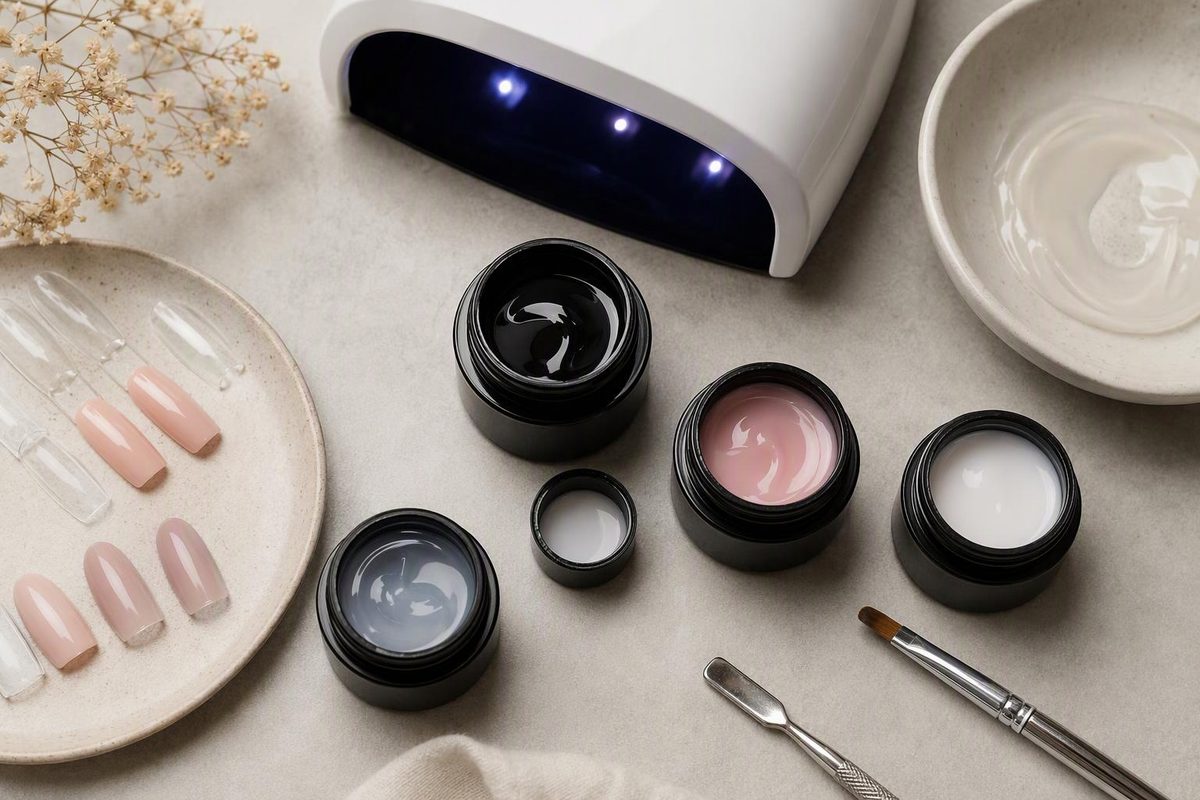
Rubber base gel is a lamp-cured base coat marketed as more flexible than a conventional rigid enhancement. It can add thickness, smooth an uneven nail and provide a foundation for gel color. Some tinted versions can also be worn alone.
The name does not define one formula or level of strength. Products sold as rubber base range from flexible base coats to thicker, buildable gels. Gelish, for example, separates its Foundation Flex rubber base from its thicker Brush-On Structure and Brush-On Builder products. NSI, by contrast, gives instructions for using its Rubber Base as an overlay or to sculpt an extension. Those different use cases are why the bottle’s directions matter more than the category name.
What rubber base gel does
Depending on the product, rubber base can provide:
- Adhesion: a layer between the natural nail and gel color.
- Flexibility: a coating designed to move with a flexible natural nail.
- Light structure: enough viscosity to level shallow irregularities, build a small apex or reinforce a short natural nail.
“Rubber” describes the marketed flexibility or rubberized behavior of the cured coating. The name alone does not tell you whether a particular ingredient is present, so check the ingredient declaration for the actual composition.
Rubber base is still a gel product: it does not air-dry and must be cured with a compatible lamp. For the underlying chemistry, see how lamp-cured gel differs from ordinary polish. A conventional rubber base left out of the lamp is not properly cured; the formula’s directions decide whether gel can dry without UV light.
Rubber base versus builder gel and hard gel
These product labels overlap, and viscosity alone does not establish what a gel can do.
| Label | Commonly marketed role | Structure | Removal question to check |
|---|---|---|---|
| Standard gel base | Bonding layer under color | Minimal added structure | Is the system soak-off? |
| Rubber base gel | Bonding plus flexible reinforcement | Light to moderate, depending on formula | Is it soak-off, and what remover is specified? |
| Soak-off builder gel | Overlay, apex, repair or permitted short extension | Usually more structure than a base coat | Can the exact formula be soaked off completely? |
| Hard gel | Structured overlay or extension | Intended for more substantial architecture | Does it require filing rather than soaking? |
These are useful shopping distinctions, not reliable substitutes for instructions. Gelish describes its rubber base as a flexible option for thin, peeling or very flexible nails while reserving its builder gel for overlays and extensions. Its official comparison of base gels shows how that brand draws the line. NSI’s Rubber Base instructions, however, include apex building and sculpting over a tip or form.
Before using any rubber base for an extension, confirm that the manufacturer explicitly permits it. A product intended only as a base coat should not be assumed to support extra length.
How to apply rubber base gel
There is no universal cure schedule or layer thickness. Treat the base, lamp, color and top coat as a product-specific system.
- Read the bottle and system instructions first. Confirm the recommended lamp, cure time, permitted thickness and whether a separate primer or base is required.
- Prepare the nail conservatively. Push back nonliving cuticle from the nail plate, shape the free edge, and remove dust and surface oils as directed. Do not aggressively thin the natural nail.
- Keep uncured gel off the skin. Leave a clean margin around the cuticle and sidewalls. If gel touches skin, stop and remove it as directed before curing rather than curing over the spill.
- Apply the specified first layer. Some systems call for one or two thin coats; buildable products may allow a small bead to create an apex. Do not copy a thick-overlay technique unless the manufacturer authorizes it.
- Use the specified lamp and cure time. Lamp wattage alone does not establish that a lamp is compatible with a particular formula.
- Add color or top coat as directed. Some tinted rubber bases can be top-coated and worn without a separate color layer.
The variation between systems is substantial. Gelish Foundation Flex calls for two thin coats, each cured for 30 seconds in the brand’s 18G LED lamp. NSI specifies 60 seconds in LED or two minutes in UV for each Rubber Base layer, after separate bonding and base products. Neither schedule should be transferred automatically to another bottle.
How removal works
First identify whether the exact formula is soak-off, file-off or removed through a combination of filing and soaking.
For a soak-off rubber base, follow this general sequence only where it agrees with the product directions:
- File away the top coat’s sealed shine without filing deeply into the natural nail.
- Apply the remover using the bowl or wrap method specified by the manufacturer.
- Wait for the coating to soften, then test one nail.
- Rewrap or continue the instructed process where material remains firm.
- Remove only softened material without force.
NSI directs users to remove the top coat and alternate soaking and filing until its Rubber Base becomes soft; it also offers a remover-soaked wrap as an alternative. This illustrates why “soak-off” does not supply a universal removal time. Product thickness, color and top-coat layers can all change the process.
Do not pick or peel off resistant rubber base. Follow the specified soak-and-file method rather than forcing intact coating from the nail.
Is rubber base safer or longer-wearing than ordinary gel base?
Flexibility may be useful when a natural nail bends enough to make a less flexible coating crack or lift. It does not establish that rubber base will last longer for everyone. Nail condition, preparation, coating thickness, lamp compatibility, daily use and removal all influence wear. Manufacturer descriptions are product claims, not independent head-to-head evidence.
Nor does the word “rubber” make a gel allergy-proof. Flexible base gels can contain methacrylates; for example, Kokoist lists 2-hydroxyethyl methacrylate in its Mega Stick soft base gel. Formulas differ, so assess the ingredient list for the exact bottle sold in your market rather than making assumptions from the product category.
The British Association of Dermatologists says skin contact with uncured (meth)acrylate nail products can lead to sensitization and that insufficient curing may increase allergy risk. It advises avoiding skin contact and using the recommended lamp rather than combining a polish with an unvalidated lamp (BAD gel-nail allergy guidance). The FDA likewise advises following label directions and notes that reactive methacrylate monomers can cause redness, swelling and pain in people who have become sensitized (FDA nail-product guidance).
Stop using the product and seek medical advice if a reaction such as itching, redness, swelling or pain develops. Do not test a suspected gel allergy by applying more uncured product to the skin.
Choosing a rubber base
Check five details before buying:
- Does the manufacturer describe it as a thin base, a leveling overlay or an extension product?
- Is it soak-off, file-off or removed with both methods?
- Which exact lamp and cure schedule are specified?
- Is a primer or separate base required?
- Is an ingredient list available for the bottle sold in your market?
Rubber base may suit someone who wants more leveling or flexible reinforcement than a thin gel base provides, without moving automatically to a substantial builder enhancement. Choose by the documented formula, curing system, removal method and permitted structure—not by the word “rubber” alone.