
Can you overcure gel polish? Follow the system, not a longer timer
Overcuring is possible, but an extra lamp cycle doesn't prove damage. Check cure times, sticky residue, lamp compatibility and warning signs.
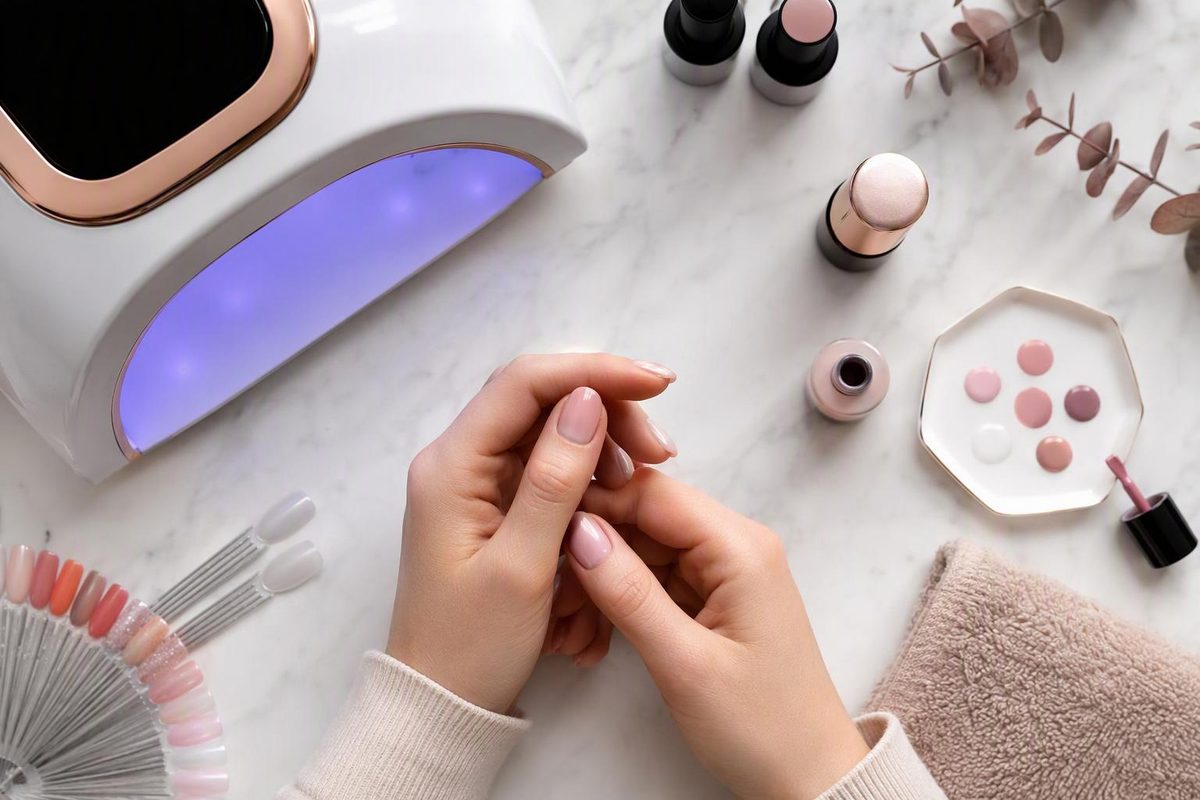
Yes—overcuring is possible, but an extra lamp cycle does not automatically mean you have ruined your manicure. The useful rule is to cure each coat for the time specified by its manufacturer, in the recommended lamp. Longer is not automatically better, and extra time is not a dependable workaround for an incompatible lamp.
Nail-product scientist Doug Schoon describes excessive UV energy as a cause of overly rapid curing and painful heat. He also explains that continued UV exposure—including sunlight and tanning beds—can make some coatings brittle or discolored, particularly poorly formulated products. These are possible effects—not proof that one accidental extra cycle damages every gel polish. Schoon’s explanation of overcuring does not establish a universal extra-time limit.
What counts as too long?
There is no single maximum curing time that applies to every gel polish and lamp. Correct curing depends on the formula, layer thickness, light wavelengths and intensity, and lamp design. A lamp’s advertised wattage is its power consumption, not a direct measurement of the curing light reaching your nails. Hardening alone also does not establish a proper cure, as NailKnowledge’s technical explanation emphasizes.
For a concrete example, OPI’s GelColor Intelli-Gel instructions, as of October 2026, specify thin coats and 30 seconds per coat in the OPI Star Light Gel Lamp: Super Base Base Coat, first color coat, second color coat and Super Gloss Top Coat. That is a product-and-lamp instruction—not a 30-second rule for all gels.
Notice that earlier layers go back into the lamp when subsequent layers are cured. Those repeated exposures are part of the instructed manicure sequence. Do not shorten later cures to “protect” the base coat, or add bonus cycles just for reassurance.
If you accidentally ran another cycle
An extra timer cycle alone cannot tell you whether the coating was overcured. Stop adding cycles and check the directions for the exact base, color, top coat and lamp you used.
- If everything looks normal and feels comfortable: do not assume the manicure needs to be peeled or scraped off because the timer ran twice. Use the manufacturer’s normal removal method when removal is needed. Normal appearance does not, however, confirm a proper cure if you used the wrong lamp or application method.
- If the lamp causes burning or significant pain: remove your hand and stop the application rather than pushing through it. Excessive curing energy can create painful heat, but the sensation is not a reliable diagnosis of the finished coating’s cure.
- If the coating is discolored, cracking or lifting: do not diagnose overcuring from appearance alone. Check the full application process and ask the manufacturer or a qualified nail professional about the system before repeating it.
Avoid picking off gel to investigate what happened. The American Academy of Dermatology recommends professional removal rather than picking and advises seeing a dermatologist for unusual nail changes or persistent nail problems.
Sticky does not necessarily mean undercured
Some gel systems require a final cleanse. OPI’s GelColor instructions, for example, explicitly direct users to remove gel residue with its cleansing solution after the specified Super Gloss Top Coat cure. Repeatedly curing that residue is not the instructed finishing step.
Check whether your top coat requires cleansing or is labeled no-wipe. Do not use tackiness—or a hard, glossy surface—as your only cure test.
Prevent undercuring without chasing “extra safe” time
Concern about overcuring is not a reason to reduce the required cure. The British Association of Dermatologists warns that insufficient curing can increase allergy risk and that uncured product touching skin can cause sensitization. It recommends reading the instructions, using the recommended lamp and avoiding skin contact.
Apply the specified coat thickness, keep gel off surrounding skin and complete every required cure. If compatibility is unclear, get confirmation rather than guessing a longer time. For UV-emitting lamps, the AAD recommends broad-spectrum, water-resistant SPF 30 or higher on the hands, or dark opaque gloves with the fingertips exposed.
If itching, swelling, rash or nail lifting develops, stop using the products and seek medical advice—not another lamp cycle.