
Non-Acetate and Non-Acetone Nail Polish Removers Aren’t the Same
Learn how non-acetate differs from non-acetone nail polish remover, which ingredients to check, and why your manicure system determines removal.
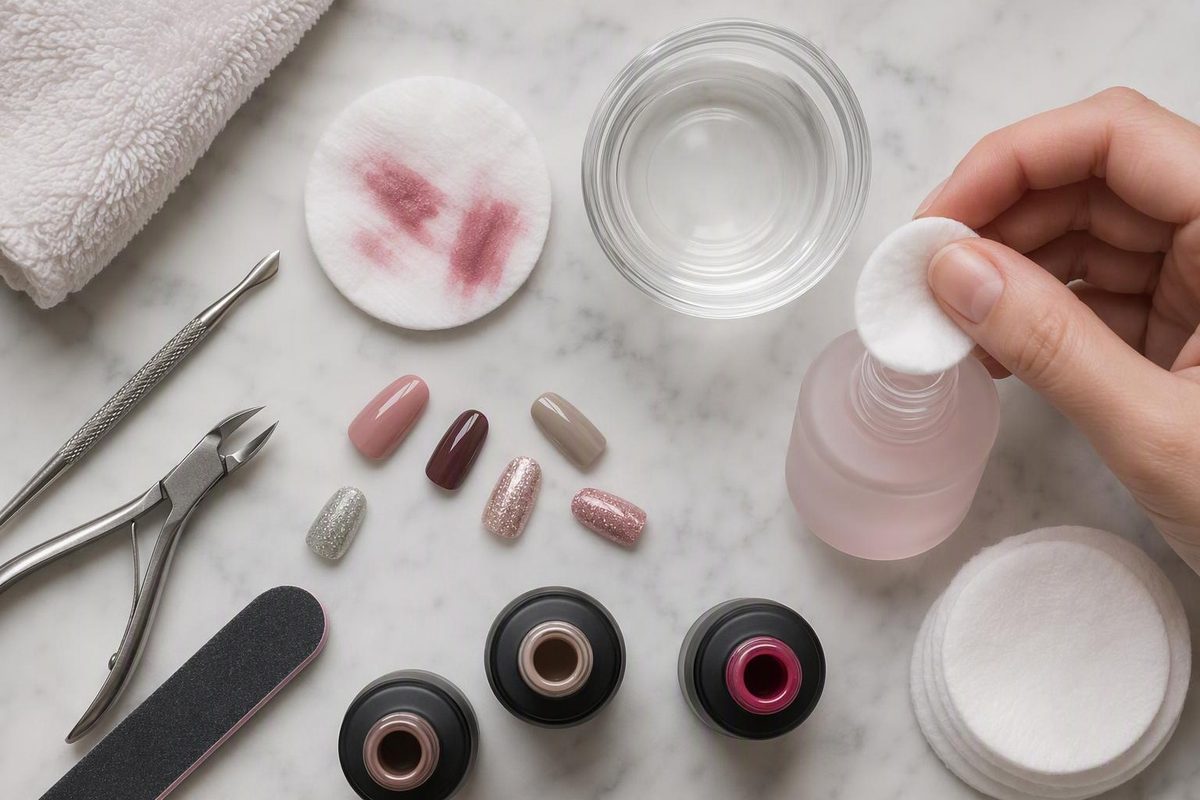
If you’re looking for non-acetate nail polish remover, first decide whether you mean acetone-free or a remover without acetate solvents. Those are different requirements. A bottle labeled “non-acetone” can still contain methyl acetate: as of October 4, 2026, Harmons’ ingredient listing for Cutex Non-Acetone begins with it.
For ordinary polish, alternative solvent formulas are available. For a lamp-cured manicure, the nail system’s removal instructions matter more than a “free-from” label.
What to look for on the ingredient list
Acetone and acetates are not interchangeable names. Acetone is one polish-removal solvent; ethyl acetate and methyl acetate are others. Removers that avoid these solvents may instead use dibasic esters, methyl soyate or propylene carbonate. They still use solvents—“soy-based” does not mean solvent-free. Lab Muffin’s chemistry explanation describes these alternatives and their functions.
Use the ingredient list to match your actual goal:
| Your goal | What to check |
|---|---|
| Avoid acetone | Look for “acetone-free,” then check the full ingredient list. Acetate solvents may still be present. |
| Avoid common acetate removal solvents | Check specifically for ethyl acetate and methyl acetate, rather than relying on “non-acetone.” |
| Avoid a particular ingredient after a diagnosed reaction | Follow your clinician’s exact avoidance list; don’t substitute a broad marketing category. |
There’s another label wrinkle: an ingredient ending in “acetate” is not necessarily the main removal solvent. For example, ella+mila’s published Unscented Soy Remover ingredient disclosure lists dimethyl glutarate and dimethyl adipate, plus methyl oleate/palmitate/linoleate/stearate—but also tocopheryl acetate. That list illustrates why “without acetate solvents” and “without any acetate-named ingredient” are different requests.
Check the bottle you’re buying, not just an online listing. The Cutex retailer itself notes that displayed product information may not be current or complete.
What to expect during removal
Alternative solvents may require more patience than acetone. Lab Muffin explains that these less-volatile solvents evaporate more slowly and can be less efficient at dissolving polish. That is a chemistry-based comparison, not a timed test of every finished remover.
Follow the chosen product’s contact time rather than assuming it should work immediately. For example, ella+mila’s Lavender Soy Remover directions say to:
- Saturate a cotton ball or pad.
- Wipe all nails first, then let the remover sit for at least 20–30 seconds.
- Wipe each nail until the polish is removed.
- Make sure nails are clean and dry before applying new polish.
That waiting period is the manufacturer’s application instruction—not a promise that a whole manicure comes off in 30 seconds. The same directions warn that excessive remover may damage acrylic or plastic surfaces, so protect your worktop.
Don’t substitute it automatically for gel remover
A remover suitable for ordinary polish is not automatically suitable for your gel system. For example, CND’s SHELLAC removal protocol for natural nails specifies OFFLY FAST remover in wraps, with timing determined by the top coat. Its system FAQ explicitly describes the wraps as targeting acetone exposure.
If avoiding acetone is essential to you, confirm an approved alternative with the system manufacturer before choosing that manicure. Our guide to gel nail polish explains how it differs from air-drying lacquer.
Whatever the solvent, a “free-from” claim is not a safety guarantee. Use good ventilation, avoid eye contact, keep remover away from children, and follow its heat and flame warnings. These precautions follow FDA nail-product safety guidance; the listed Cutex non-acetone formula is still labeled flammable.