
HEMA-free gel polish is not an allergy-safety guarantee
Learn what HEMA-free gel polish means, how to check the whole manicure system, and why ingredients, lamp compatibility and allergy history matter.
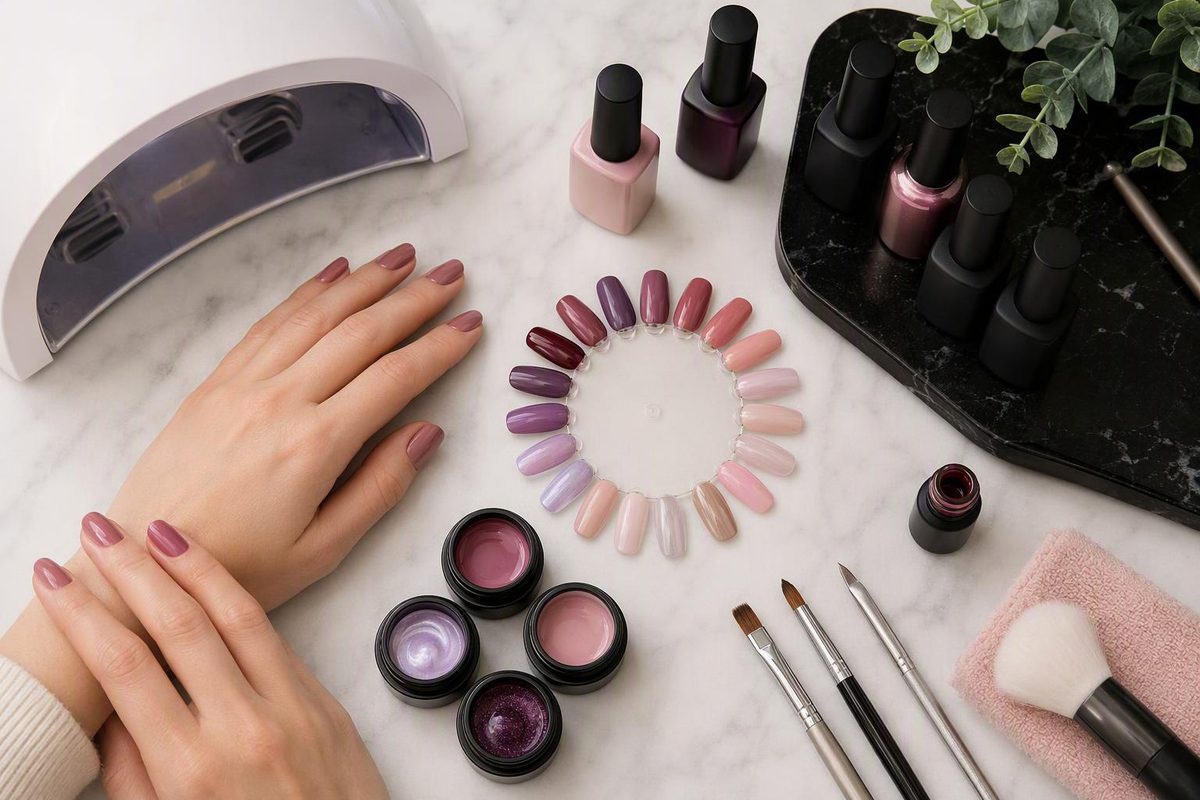
HEMA-free gel polish claims to exclude HEMA, one specific methacrylate ingredient. It does not mean acrylate-free, allergy-proof or safe to use after a previous gel reaction. Other reactive ingredients can still cause allergic contact dermatitis, and uncured skin contact or insufficient curing remains a concern. The British Association of Dermatologists (BAD) warns about both exposure routes.
For shopping, treat “HEMA-free” as an ingredient filter—not the final safety decision. Check the exact formula, every layer of the manicure and the manufacturer’s lamp instructions.
What ingredient are you avoiding?
HEMA is 2-hydroxyethyl methacrylate, also written as hydroxyethyl methacrylate or 2-HEMA. Its CAS number is 868-77-9. It is a reactive building block used in nail products; curing joins these types of building blocks into larger polymer chains. The smaller, uncured molecules are usually the concern for contact allergy, rather than the hardened plastic. See the EU ingredient identification and British Society for Cutaneous Allergy’s explanation of curing.
Similar-looking names are not interchangeable:
| Ingredient on the label | What it tells you |
|---|---|
| HEMA / Hydroxyethyl Methacrylate | This is the ingredient a HEMA-free claim should exclude. |
| Di-HEMA Trimethylhexyl Dicarbamate | A distinct ingredient. Do not assume a HEMA-free claim also excludes it. |
| Hydroxypropyl Methacrylate / HPMA | Another methacrylate—not HEMA, but still relevant to contact allergy. |
The EU regulation lists HEMA and Di-HEMA Trimethylhexyl Dicarbamate separately. In the EU, nail products containing either are restricted to professional use and must carry “For professional use only” and “Can cause an allergic reaction” warnings. That is a jurisdiction-specific restriction, not a worldwide ban on HEMA.
Why HEMA-free can still cause a reaction
HEMA is not the only nail allergen. In a retrospective study from an Israeli patch-test clinic, 22 of 153 patients with confirmed nail-acrylate allergy—14.4%—would have been missed by testing only for HEMA. HPMA and ethylene glycol dimethacrylate were common positive allergens in that group. These were selected clinic patients, so the figures do not estimate the chance that an ordinary gel user will develop an allergy.
A current product disclosure illustrates the distinction. As of October 3, 2026, Madam Glam markets its Love Sprinkles gel top coat as HEMA-free, while its published ingredient list includes Hydroxypropyl Methacrylate and Hexanediol Diacrylate. That is an example of other reactive ingredients remaining in a HEMA-free formula—not a prediction of an individual user’s allergy risk.
Nor does a HEMA-free claim, by itself, establish how much lower a product’s overall allergy risk might be. That requires evidence about the complete formulation and its use, not simply the absence of one ingredient.
Check the whole manicure before buying
Use this short checklist for an at-home kit or a salon appointment:
- Match the disclosure to the exact product. Check the bottle or packaging and the manufacturer’s current ingredient list. Do not substitute an old retailer listing or a brand-wide slogan for the formula you will use.
- Check every applied layer. Ask about primer or bonder, base coat, builder, color and top coat—not just the HEMA-free color bottle.
- Read professional-use restrictions. A HEMA-free label is not permission to use a product intended only for trained professionals.
- Confirm the recommended lamp and cure schedule. Get instructions for each layer, including coat thickness and any shade-specific directions. BAD advises using the recommended lamp rather than pairing it with unrelated polishes purchased separately.
- Know the removal method before starting. Find out whether the complete system soaks off or includes a file-off structural layer.
The British Society for Cutaneous Allergy stresses that ingredient lists change and should be checked on the product, package or insert. BAD’s application guidance applies even when HEMA is absent: avoid direct skin contact with uncured gel and follow the recommended curing setup.
Application, wear and removal still depend on the system
HEMA-free conventional gel is still lamp-cured gel—not air-drying lacquer. Our gel-polish chemistry guide explains that distinction.
For one documented example, Light Elegance describes its P+ line as HEMA-monomer-free. As of October 3, 2026, its P+ QDbase instructions specify thin application, a one-minute base cure in its LEDdot or LED MiniDot lamp, and a color/top-coat sequence. The manufacturer claims 21-plus-day wear and 7–10-minute acetone removal when QDbase is used beneath P+ color or glitter. Its removal directions require filing through the top coat before soaking. Those are manufacturer claims for that system, not independent wear-test results or timings for every HEMA-free polish.
Choose by the documented application and removal process. The HEMA-free label alone does not tell you how long a manicure will last or how easily it will come off.
If you have already reacted, don’t test a replacement yourself
Itching, burning, scaling or blistering around the fingers can occur with acrylate allergy; dermatitis can also appear on the eyelids, face or neck. These symptoms are not enough to identify the responsible ingredient yourself. DermNet’s acrylate-allergy guidance describes diagnosis through clinical patch testing.
Stop using the suspected product and seek medical assessment rather than trying successive HEMA-free gels. Do not dab uncured gel on your skin as a home patch test: DermNet warns that this can cause new sensitisation. Keep the product names, packaging and ingredient lists for the appointment.
If allergy is confirmed, use your clinician’s specific avoidance advice. People may be allergic to several acrylates, though not necessarily all of them. Tell your dentist and other healthcare professionals about the confirmed allergy; it does not automatically mean existing hardened fillings need removal, as the British Society for Cutaneous Allergy explains.